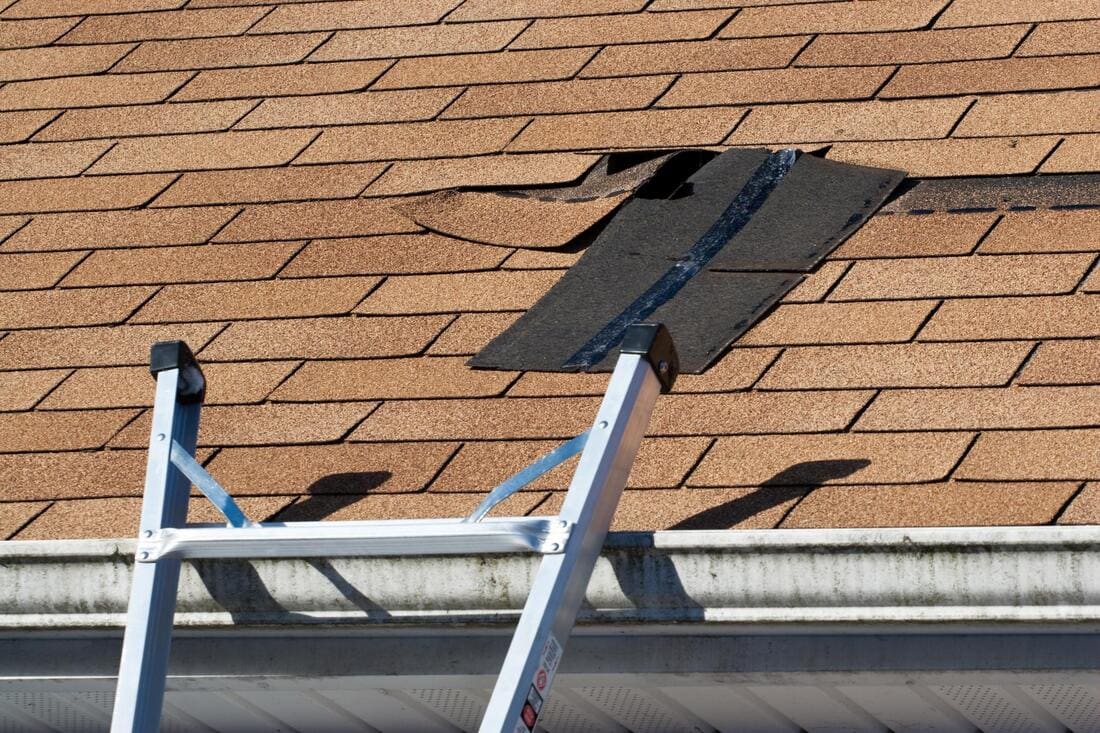
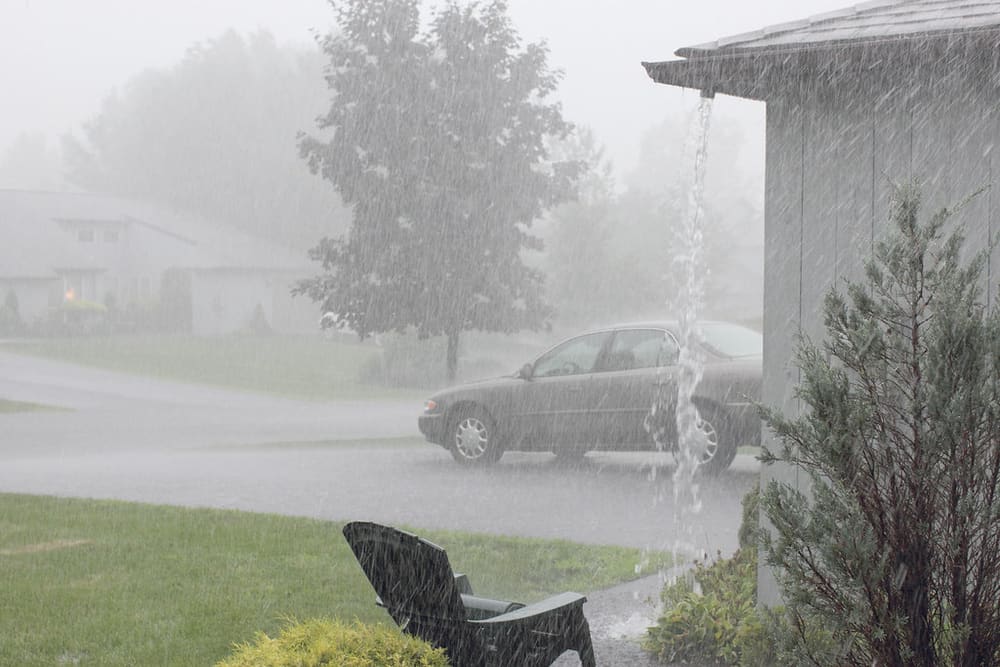
A Chandler monsoon cell can turn an ordinary evening into buckets in a bedroom, tile pieces on the patio, or shingles folded back at a roof edge. Damage may be limited to one exposed plane even when nearby houses look untouched. Call (623) 241-4904 when wind, blowing dust, rain, or occasional hail changes the roof. The first decision is whether the house needs weather protection now or a documented inspection in daylight.
Microburst damage is often uneven
A microburst downdraft spreads across roofs at changing angles. Wind can catch an eave, lift shingle tabs at one corner, slide a row of tile below the ridge, loosen a cap piece, or drive water into a wall or patio connection. The inspection should begin with the homeowner’s symptom, then scan adjacent ridges, edges, valleys, vents, and penetrations for movement from the same gust.
Blowing dust and roof debris complicate the water path. Material packed into a valley or at a roof edge can slow runoff just before heavy rain arrives. Water then reaches laps and flashings from a direction they rarely see in a calm shower. Once conditions are safe, photos should distinguish a drainage obstruction from broken surface material or torn underlayment.

Storm documentation without pressure
Storm documentation can include wide views of each affected slope, close views of displaced tile or lifted shingles, dents on soft metal, opened flashings, roof-edge damage, interior stains, and gutter or fascia conditions. The contractor can turn observed work into an itemized scope and may coordinate an adjuster meeting when offered. Review roof inspection details if the interior remains dry but the surface looks changed.
Photos and a repair estimate document visible conditions; they do not decide coverage. Your insurer applies the policy, and no contractor can promise approval. Ask that storm and age-related work be separated when both appear, and reject any proposal built around absorbing or disguising a deductible. A clear contract is more useful than a prediction about the claim.
Dry-in first, permanent repair second
When water is moving indoors or the roof is visibly open, temporary weather protection may come first. Chandler dry-in work uses $400-$1,000 as a planning band until height, access, wind, rain, and opening size are known. A tarp, secured cover, or limited seal protects the occupied home while materials and a permanent repair are organized.
A dry-in should have a follow-up path. The permanent scope may reset a tile field, repair underlayment, replace a shingle section, rebuild ridge or wall flashing, or address damaged decking. Use emergency roof repair for active water. Use roof inspection if the surface only looks suspicious, and consult the cost guide once the affected area has been documented.
What Chandler homeowners should do before the visit
Collect broken pieces only when they are reachable from the ground. Note when wind or water started, which rooms showed moisture, and whether the drip continues after rain stops. Move belongings, place containers under water, avoid sagging ceiling areas, and take indoor photos. Do not climb wet tile or shingles for evidence. Call (623) 241-4904 again if the condition changes before the scheduled visit so the urgency can be reassessed. Keep earlier contractor paperwork and roof photos together so later scope discussions distinguish new storm movement from older maintenance conditions.